Desert Tortoise Preserve Committee, Inc.
  • About Us
    • Our Mission
    • Board Members & Staff
    • Contact Us
  • Desert Tortoise & Habitat
    • The Desert Tortoise
    • Lifecycle of the Desert Tortoise
    • Conservation Status
    • Managing Raven Predation
    • Research & Publications
    • FAQ’s
  • DTRNA & Protected Areas
    • Overview & Location
    • Visiting the DTRNA
    • Wildlife & Trail Guides
    • Off Highway Vehicle Info
  • Captive or Found Tortoises
    • Keep Wild Tortoises Wild!
    • Captive Tortoises
  • News & Events
    • Meetings, Events, Workshops
    • News & Press Releases
    • Tortoise Tracks Newsletter
    • Volunteer Work Parties
  • Support Us
    •  
  • Click to open the search input field Click to open the search input field Search
  • Menu Menu
  • Conservation Status

Habitat & Distribution

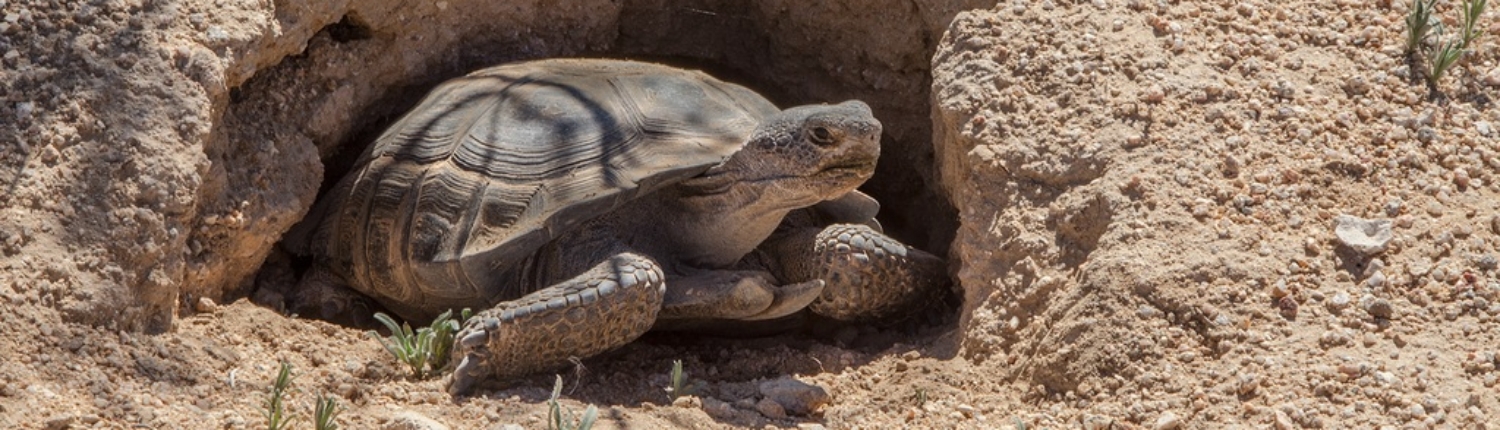
Desert tortoises (Gopherus agassizii) are listed as ENDANGERED under the California Endangered Species Act (CESA), and as THREATENED under the federal Endangered Species Act.

Desert tortoises were first listed as threatened in California in 1989, but since then their population has continued to decline. The California Fish and Game Commission formalized the decision to “uplist” the tortoise to the more dire status of “endangered” in 2025, based on current scientific data, and after years of advocacy by the Desert Tortoise Preserve Committee, the Desert Tortoise Council, and Defenders of Wildlife, who together petitioned the Commission for the uplisting in March 2020.

Being in danger of extinction is never good, of course, but endangered status under CESA has significant advantages for tortoise conservation. Access to conservation funding is always competitive; endangered status moves a species closer to the head of the line when vying for those funds. That means a better chance for government grant money for things like land acquisition and habitat restoration. And it’s not just about government help; endangered status also means more public attention, which can lead to more individuals, organizations, and businesses wanting to do their part.

    Desert Tortoise & Habitat

  • The Desert Tortoise
  • Lifecycle of the Desert Tortoise
  • Conservation Status
  • Managing Raven Predation
  • Research & Publications
  • FAQ’s

Support Us

Become a member, subscribe, donate or find out about other ways to support the DTPC.

Support Us

4star-ratingbadge-2025 400

Desert Tortoise Preserve Committee

(442) 294-4258
email hidden; JavaScript is required

  • Link to Facebook
  • Link to LinkedIn
  • Link to Instagram

Office Address

114 B South China Lake Blvd.
Ridgecrest, California 93555

Mailing Address

PO Box 940
Ridgecrest, California 93556

  • About Us
  • Desert Tortoise & Habitat
  • DTRNA & Protected Areas
  • Captive or Found Tortoises
  • News & Events
  • Support Us
Scroll to top Scroll to top Scroll to top