Desert Tortoise Preserve Committee, Inc.
  • About Us
    • Our Mission
    • Board Members & Staff
    • Contact Us
  • Desert Tortoise & Habitat
    • The Desert Tortoise
    • Lifecycle of the Desert Tortoise
    • Conservation Status
    • Managing Raven Predation
    • Research & Publications
    • FAQ’s
  • DTRNA & Protected Areas
    • Overview & Location
    • Visiting the DTRNA
    • Wildlife & Trail Guides
    • Off Highway Vehicle Info
  • Captive or Found Tortoises
    • Keep Wild Tortoises Wild!
    • Captive Tortoises
  • News & Events
    • Meetings, Events, Workshops
    • News & Press Releases
    • Tortoise Tracks Newsletter
    • Volunteer Work Parties
  • Support Us
    •  
  • Click to open the search input field Click to open the search input field Search
  • Menu Menu
  • The Desert Tortoise

Gopherus agassizii

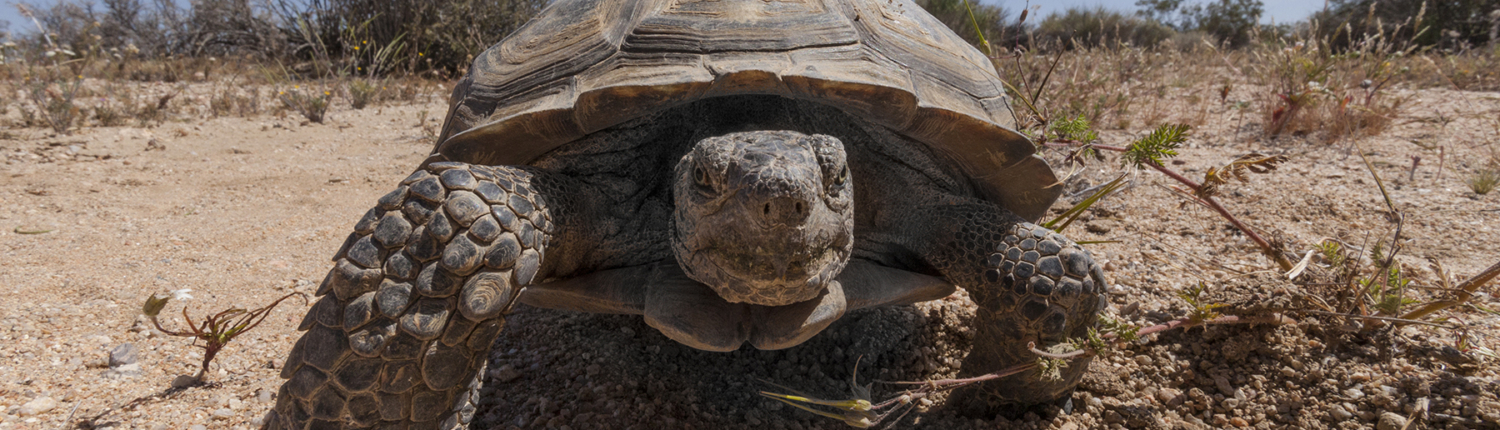
Within the desert’s fragile ecosystem, tortoise populations are rapidly diminishing; in some places they have disappeared. Losses are due to vandalism, to raven predation, disease, collections for pets (now illegal), and habitat degradation. Habitat has been lost or damaged from mining, livestock grazing, development of desert lands for agriculture, sub-divisions, high-ways, industrial uses and off-road vehicle use.

Tortoise populations grow slowly because of their low reproductive potential. Females do not breed until 15 to 20 years old and then may lay clutches of eggs only when adequate forage is available. Also, survival of juveniles is low, only 2-3 per 100 hatched may live to become adults.

To read more about the desert tortoise in the wild click on the article titles listed below.

Commonly Asked Questions About the Desert Tortoise and Answers
by Kristin H. Berry

Habitat Use and Food Preferences of the Desert Tortoise, Gopherus agassizii, in the Western Mojave Desert and Impacts of Off-road Vehicles
by W. Bryan Jennings

Life Cycle of the Desert Tortoise
brief, illustrated guide to the life history of desert tortoises.

Plants Eaten by Juvenile Desert Tortoises in the Central Mojave Desert
by E. Karen Spangenberg

The Desert Tortoise and Upper Respiratory Tract Disease
by Elliot Jacobson

    Desert Tortoise & Habitat

  • The Desert Tortoise
  • Lifecycle of the Desert Tortoise
  • Conservation Status
  • Managing Raven Predation
  • Research & Publications
  • FAQ’s

Support Us

Become a member, subscribe, donate or find out about other ways to support the DTPC.

Support Us

4star-ratingbadge-2025 400

Desert Tortoise Preserve Committee

(442) 294-4258
email hidden; JavaScript is required

  • Link to Facebook
  • Link to LinkedIn
  • Link to Instagram

Office Address

114 B South China Lake Blvd.
Ridgecrest, California 93555

Mailing Address

PO Box 940
Ridgecrest, California 93556

  • About Us
  • Desert Tortoise & Habitat
  • DTRNA & Protected Areas
  • Captive or Found Tortoises
  • News & Events
  • Support Us
Scroll to top Scroll to top Scroll to top